
The Kookaburra Turf White has a four-piece construction and a five-layer quilted center. Its white color makes it easy to spot under floodlights, which is exactly why it suits day-night matches so well.
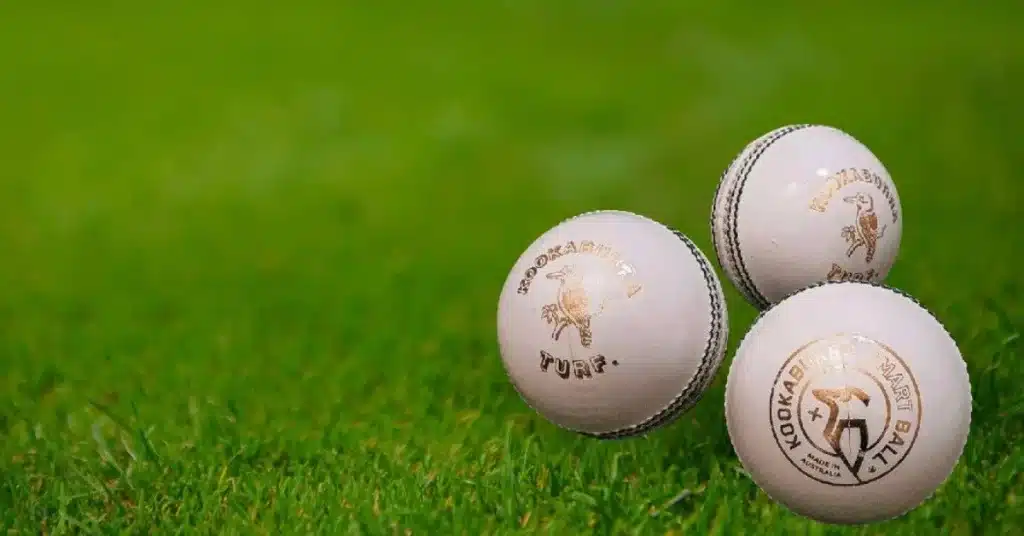
The ball is made from premium leather and undergoes a careful production process. This keeps its shape and feels consistent throughout. Bowlers also get a superior grip, which helps them vary their deliveries.
Key Features of the IPL Ball
Here are the Key Features of the IPL Ball:
| Feature | Description | Key Benefit |
|---|---|---|
| Manufacturing | Made in Australia using top-grade leather. | Ensures high-quality control and consistency. |
| Stitching | Features fine, tight, and neat line stitching. | Helps the ball maintain its shape longer during play. |
| Coating | Equipped with a waterproof layer. | Remains reliable in humid or varying weather conditions. |
| Inner Core | Utilizes an air-dried inner core. | Provides a steady, predictable bounce throughout the innings. |
| Weight | Precision-weighted between 156–162 grams. | Ideal “sweet spot” for both batsmen and bowlers. |
| Track Record | Used in 100% of ODIs and T20 Internationals. | Proven performance at the highest professional level. |
Why Does the IPL Cricket Ball Cost So Much?
A lot goes into that ₹10,000+ price tag. Here are the main reasons:
- Material quality: Better leather costs more. The IPL ball uses top-grade leather that lasts longer and performs better, so the price reflects that.
- Manufacturing process: Some balls are hand-stitched, which takes longer and requires more skilled labor. That pushes costs up compared to machine-stitched options.
- Brand reputation: Brands like Kookaburra, SG, and Dukes have spent decades building their names in cricket. Teams trust them because they deliver consistent results at the highest level. That trust carries a price.
- High demand from top tournaments: Balls used in high-profile events like the IPL undergo stricter checks. The specific standards set by the BCCI and the IPL also add to the cost.
- Durability for T20 cricket: A T20 ball takes a beating. Batters hit hard from ball one. The ball needs to hold its shape through 20 overs of aggressive play, and that kind of durability costs money to build in.
Other Cricket Balls And Their Prices
The Kookaburra Turf White is just one of many cricket match balls. Different formats and countries use different balls. Here’s a quick comparison:
| Ball Name | Color | Leather Type | Weight (grams) | Format | Price (INR) |
|---|---|---|---|---|---|
| Kookaburra Turf Red | Red | Premium Leather | 156 – 162 | Test Matches | ₹10,000 – ₹12,000 |
| SG Test | Red | Premium Leather | 156 – 162 | Test Matches (India) | ₹5,000 – ₹6,000 |
| Dukes | Red | Hand-stitched Leather | 156 – 162 | Test Matches (England, West Indies) | ₹8,000 – ₹10,000 |
Kookaburra Turf Red
This is the red version of the IPL ball. Countries like Australia, South Africa, and New Zealand use it for Test matches. It holds its condition well over five days of play, making it ideal for long-format cricket.
Key features include excellent seam retention, a consistent bounce, and the durability needed to last a full Test match.
SG Test Ball
Sanspareils Greenlands, an Indian company with a long history in cricket, makes the SG Test ball. The BCCI uses it for all Test matches played in India.
It swings well in Indian weather and on Indian pitches. Spinners and swing bowlers both find it easy to grip the ball. It also costs less than imported options, making it a smart choice for domestic cricket as well.
Dukes Ball
Craftsmen in England hand-stitch the Duke’s ball from premium leather. England and the West Indies use it for Test matches.
Its seam stands up higher than other balls’, which helps swing bowlers move the ball in the air for longer. The darker red shade also works well under English overcast skies.
Suggested Reads:
Final Word: The Kookaburra Turf White Sits At The Heart of IPL cricket
Kookaburra Turf White price ₹10,000 to ₹15,000 reflects the quality of materials, the care in production, and the performance it delivers in T20 conditions.
Each ball used across cricket formats serves a purpose. The format, the country, the weather, and the pitch all shape which ball works best. But for the IPL, the Kookaburra Turf White remains the top choice, and for good reason.